How to Compare Studio Rental Listings in Switzerland and Avoid Costly Mistakes
Real estate guide - 31 July 2026
Read more
Finding a studio apartment to rent may seem straightforward on paper. In practice, comparing multiple listings in Switzerland requires looking at far more than the advertised rent. Actual living space, neighborhood, net rent, service charges, rental deposit, property condition, public transport access, and additional costs all matter. A studio that looks attractive at first glance is not always the best choice.
In Geneva, Lausanne, and Sion, prices and amenities can vary significantly from one property to another. To avoid unpleasant surprises and make a decision that fits your budget, it helps to follow a clear method.
In this guide, we review the criteria that truly matter when comparing studio rental listings, along with practical benchmarks for rents, overall housing costs, and key points to verify before submitting an application.
Why Comparing a Studio Listing Is About More Than Just the Price
Two studios advertised at the same rent can offer very different living experiences. One may be well located, bright, and well equipped, while the other may involve longer commutes, higher charges, or an impractical layout.
A meaningful comparison of listings comes down to answering three simple questions:
- Does the studio genuinely meet your day-to-day needs?
- Is the total cost compatible with your budget?
- Does the property offer a good balance of location, comfort, and amenities?
This approach helps prevent choosing a property too quickly simply because it appears cheaper at first glance.
1. Check the Size, but Above All the Layout
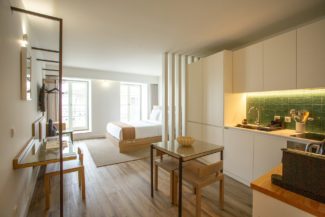
Floor area in square meters is a useful indicator, but it is not enough. In a studio apartment, the organization of the space plays a major role.
What to Look At
- Separation between the sleeping area and the living area
- Actual space available for a table, desk, or storage
- Shape of the main room
- Ceiling height
- Built-in wardrobes, a cellar/storage unit, or an additional storage room
A well-designed 28 m² studio can be more pleasant to live in than a poorly laid out 35 m² studio. Photos are useful, but they do not replace a careful review of the floor plan and an on-site visit.
Good practice:
If the listing does not clearly state the living area, ask whether balconies, mezzanines, attic spaces, or ancillary areas are included in the advertised size.
2. Evaluate the Location Based on Your Real Needs
The best neighborhood depends less on its reputation and more on your lifestyle. Before comparing listings, identify your priorities: proximity to work, university access, shops, quiet surroundings, parking, public transport, or neighborhood atmosphere.
Questions to Ask Yourself
- How long will it take me to reach work or university?
- Are essential shops within walking distance?
- Is the neighborhood quiet in the evenings and on weekends?
- Is the building close to a bus stop, tram stop, or train station?
- Is the street busy, noisy, or lacking natural light?
In Geneva, Lausanne, and Sion, commuting time has a major impact on a studio’s attractiveness. A property slightly farther away but well connected by public transport may be a better compromise than a smaller, more expensive studio in the city center.
3. Compare the Rent with the Local Market
Rent should be assessed in relation to the city, neighborhood, property condition, and amenities provided.
Indicative Rent Levels for a Studio
As a general guideline, rental prices vary considerably between cities:
- Geneva: studios typically range from CHF 1,200 to CHF 1,800 per month, with higher rents in central and highly sought-after areas.
- Lausanne: studios are often priced around CHF 1,000 to CHF 1,200 per month, with increases in well-connected neighborhoods and central locations.
- Sion: studios frequently range from CHF 850 to CHF 1,150 per month, depending on size, condition, and location.
These figures are only indicative. Actual rent depends on factors such as the date of listing, level of renovation, the presence of a balcony, parking space, furnishings, and whether charges are included.
How to Determine Whether the Price Is Reasonable
A higher rent may be justified if the studio offers:
- A highly convenient location
- Recent renovations
- A well-equipped kitchen
- A balcony or outdoor space
- Better sound or thermal insulation
- Additional building services
Conversely, a low rent is only attractive if additional expenses, property condition, and day-to-day comfort remain acceptable.
4. Focus on Neighborhoods, Not Just Cities
Rental budgets can vary significantly from one neighborhood to another, especially in larger urban areas.
Geneva
In central and highly desirable districts, rents are generally higher, particularly when studios are close to the lake, tram lines, or employment hubs. These lively neighborhoods offer excellent accessibility but may also be noisier.
Lausanne
The city center, lakeside districts, and well-connected neighborhoods are often the most competitive. Moving slightly outside the core area can provide a better balance between budget, space, and comfort.
Sion
The city center, areas near the train station, and neighborhoods with strong accessibility remain popular. Outside the most sought-after locations, the market may offer more affordable opportunities for comparable budgets.
5. Verify Exactly What the Charges Include
One of the most common mistakes is comparing only the net rent. In reality, the true cost of a studio depends on the total monthly amount you will pay.
Charges Commonly Included or Partially Included
In Switzerland, it is important to distinguish between net rent and gross rent. Gross rent is the net rent plus service charges.
Depending on the listing, charges may cover all or part of:
- Heating
- Hot water
- Maintenance of common areas
- Elevator costs
- Certain technical building expenses
Costs Often Paid Separately
In many cases, you will also need to budget for:
- Electricity
- Internet
- Household and personal liability insurance
- Media or communications fees, depending on the equipment provided
- Parking space, if not included
Questions to Ask Before Making a Decision
Always request:
- The exact amount of charges
- Whether charges are fixed or advance payments subject to annual adjustment
- What is included and what is excluded
- Whether annual reconciliations are possible
- Whether the advertised amount is net rent or gross rent
A listing that appears competitive may become less attractive if several additional expenses remain your responsibility.
6. The Total Cost Checklist for a Studio
Before comparing two properties, add up every expense category. This is the best way to avoid a gap between your planned budget and actual costs.
Monthly Cost Checklist
- Net rent
- Service charges
- Electricity
- Internet
- Household and personal liability insurance
- Parking space or parking subscription
- Public transport pass, if required by the location
Moving-In Cost Checklist
- Rental deposit
- First month’s rent
- Moving expenses
- Furniture or equipment purchases, if necessary
- Connection or activation fees for utilities and services
Swiss-Specific Costs to Include
In Switzerland, the rental deposit may amount to up to three months’ rent, depending on the lease agreement. It is generally placed in a blocked bank account in the tenant’s name or replaced by a rental guarantee solution if accepted by the landlord. This amount should therefore be included in your initial budget.
Simple Example of a Real Budget
Studio advertised at CHF 1,050 may actually represent:
-
- CHF 1,050 in net rent;
-
- CHF 120 in service charges;
-
- CHF 60 to CHF 100 for electricity and internet;
-
- CHF 20 to CHF 40 for insurance;
-
- CHF 80 to CHF 250 for parking, depending on the city and location.
The actual monthly cost can therefore be significantly higher than the advertised rent.
7. Identify the Amenities That Truly Matter
Not all amenities have the same value depending on your lifestyle. For a studio apartment, certain features make a real difference.
Useful Amenities
- Fully equipped kitchen with sufficient storage
- Washing machine inside the apartment or easy access to a laundry room
- Balcony, terrace, or outdoor space
- Storage cellar or additional storage room
- Bicycle storage room
- Parking space or convenient parking access
- Furnishings, if you are looking for a move-in-ready solution
A furnished studio can provide greater flexibility but is often more expensive than an unfurnished property.
8. Make Your Viewing Structured and Productive
A viewing should not only confirm that you like the property. It should also help identify aspects that do not appear in the listing.
Questions to Ask During the Viewing
- What is the average amount of actual yearly charges?
- Are the charges fixed or adjusted through annual statements?
- Has the property been renovated recently?
- Are any building works planned?
- How does the laundry room operate?
- Are there specific building regulations?
- Is the area quiet in the evenings?
- Does the apartment face the street or the courtyard?
- What is the exact availability date?
Useful Checks on Site
- Assess natural light
- Open the windows
- Check storage space
- Inspect the condition of joints, sanitary fittings, and floor coverings
- Listen to noise levels from the street and common areas
9. Which Documents Should You Prepare?
In competitive rental markets, responsiveness is essential. Preparing your application in advance allows you to move quickly after a viewing.
Documents Commonly Requested in Switzerland
- Identity card or passport
- Residence permit, where applicable
- Proof of income, often the last three payslips
- Recent debt enforcement register extract
- Employer certificate or employment contract, depending on the situation
- Application form from the agency or landlord
- Proof of personal liability insurance, if required
- A rental motivation letter, in particularly competitive markets
The debt enforcement register extract is one of the most frequently requested documents in Swiss rental applications. A complete, organized file that is ready to submit quickly can significantly improve your chances, especially in Geneva and Lausanne where demand remains high.
10. Our Simple Method for Comparing Multiple Studios
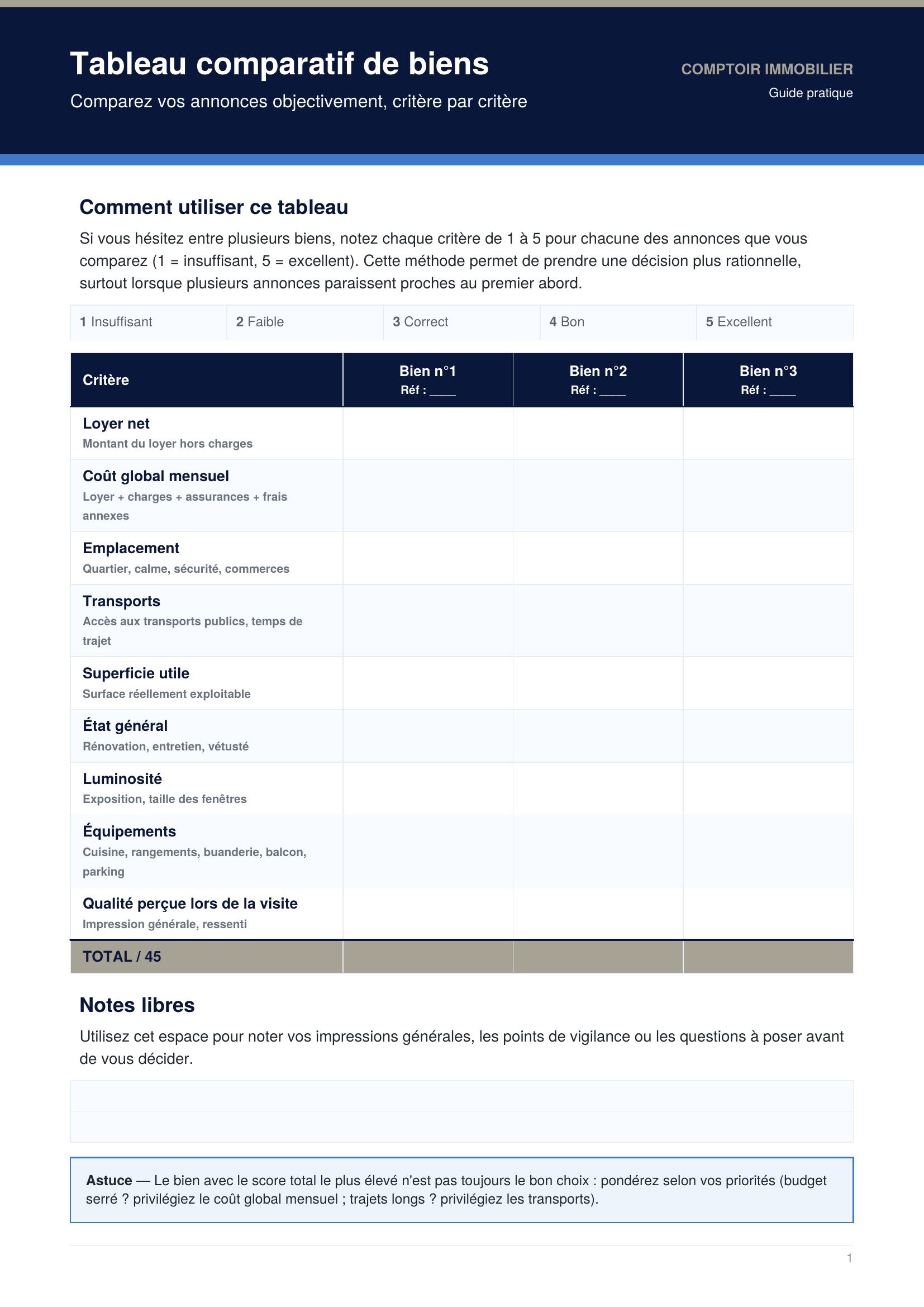
If you are hesitating between several properties, create a comparison table and rate each criterion out of five:
- Net rent
- Total monthly cost
- Location
- Public transport access
- Usable living space
- Overall condition
- Natural light
- Amenities
- Overall impression from the viewing
This method helps you make a more rational decision, especially when several listings appear similar at first glance.
Summary: Best Practices Before Choosing a Studio
To compare studio rental listings effectively:
- Compare the total cost, not just the rent
- Evaluate the neighborhood according to your real needs
- Check the usable space and layout
- Review charges and additional expenses
- Ask specific questions during the viewing
- Prepare your application documents in advance
A well-chosen studio is above all a home that matches your budget, lifestyle, and daily expectations. In Switzerland, this also requires understanding the difference between net rent and gross rent, service charges, rental deposits, and the documents required by agencies and landlords.
Need Support Finding a Studio in French-Speaking Switzerland?
At Comptoir Immobilier, we put our expertise and local market knowledge at the service of your search. We help you assess listings more effectively, understand the true costs of renting, and identify the properties best suited to your situation.
Whether you are looking for a studio in Geneva, Lausanne, Sion, or elsewhere in French-speaking Switzerland, our team provides structured, personalized support focused on quality service.
Would you like to go further? Contact our team for assistance with your rental search.